
Certified Scrum Professional® - ScrumMaster
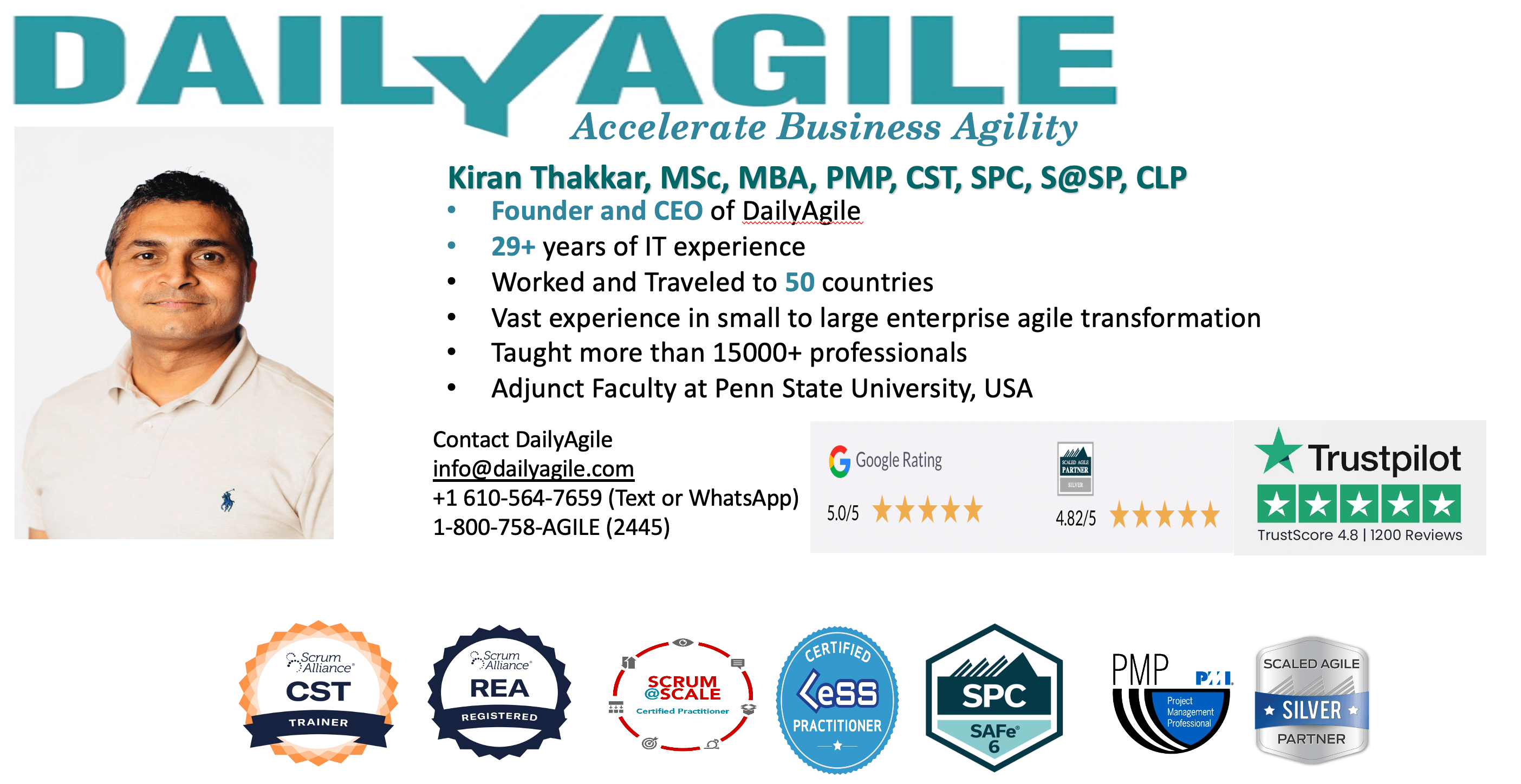
Taught by: Kiran Thakkar

Course details
Location

Online
Schedule Details
Reviews
 (5 ratings)


Excellent
Takar is very experienced, with tons of patience to answer any type of questions. The material and what the course covered is helping me elevate to a new level in my career as SM. Will definitely recommend Kiran and will seek him for any further developments I might want to pursue.
I took the CSP-SM course. I really enjoyed this course with Kiran, as he provides a vast amount of working knowledge and idea share through out the course. We all shared our experiences, road blocks, and things that worked or did not.I highly recommend as you walk away with more working knowledge, ideas to ponder and try.
Great course by an excellent instructor, I'll surely be attending another one of his courses!
Instructor shared new tools, material and templates.
More courses by Kiran
Certified Scrum Professional® - ScrumMaster
-
 Thu Jun 11 - 12, 2026
 -
 12:30 PM CUT
 -
Live Online
Certified Scrum Professional® - ScrumMaster
-
Mon Jul 20 - 21, 2026
-
12:30 PM CUT
-
Live Online